
Contract Analysis
Contract analysis is the heart of AI Legal UK. These seven commands help you understand exactly what you are signing -- before you sign it. Whether you need a full review, a risk breakdown, or help negotiating better terms, there is a command for it.
Seven commands for reviewing, comparing, and benchmarking contracts under the laws of England and Wales.
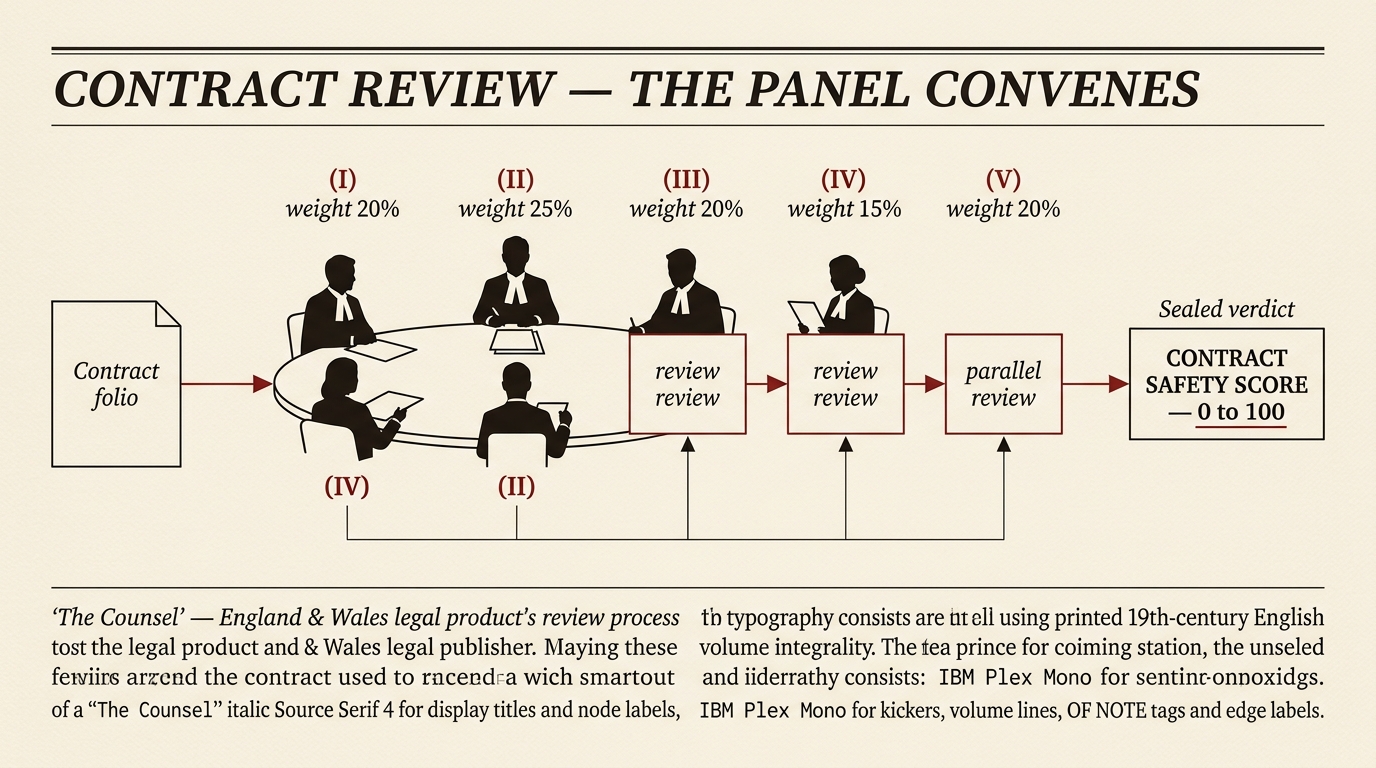
Plate I — the broadsheet rebrand.
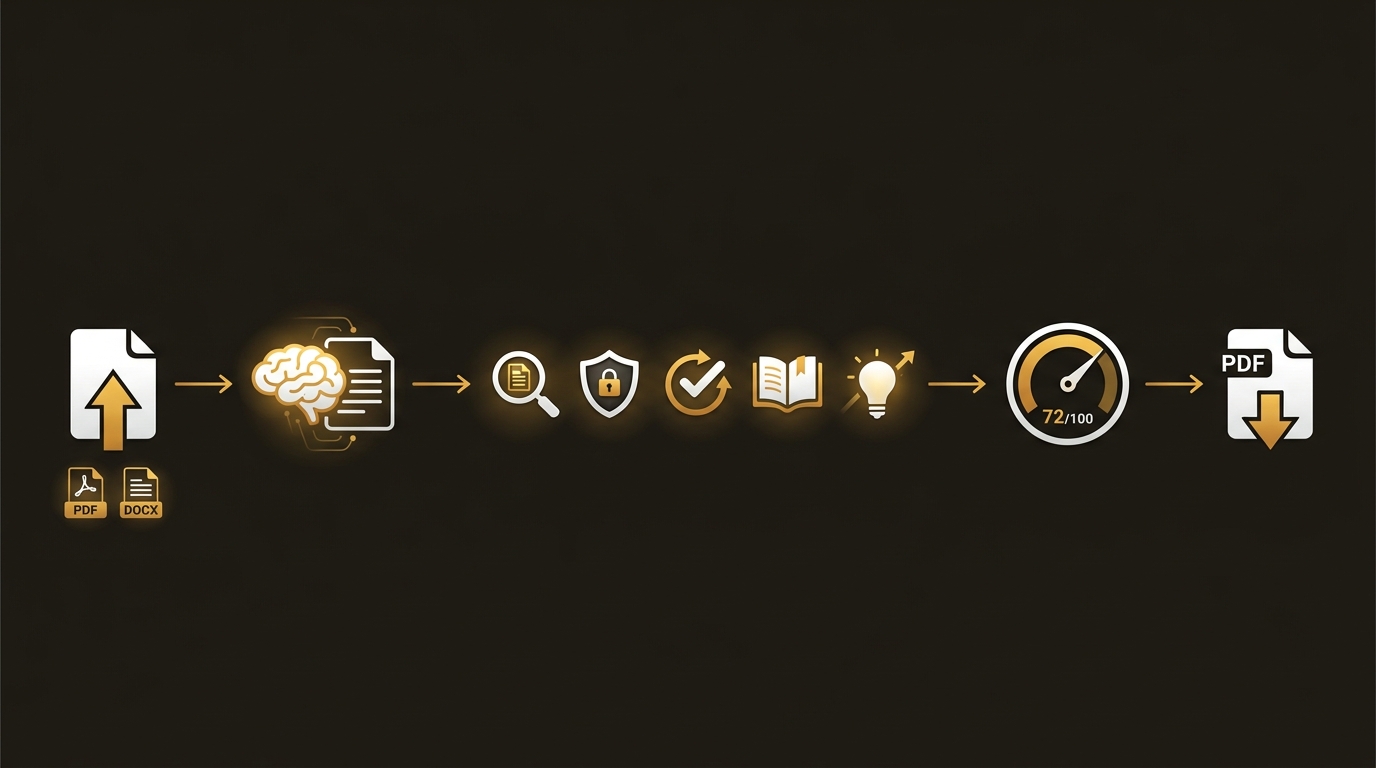
Plate I.a — the original, kept for reference.
/legal review
Why use this? You have been sent a contract. Before you sign, you want to know: is this safe? What are the risks? What should I push back on?
The flagship command. Launches 5 parallel agents that analyse every aspect of a contract and produce a unified report with a Contract Safety Score.
Syntax
/legal review <file>What it does
- Phase 1 -- Ingestion: Reads the contract, classifies the type (service agreement, employment, NDA, SaaS, freelancer, partnership, lease, sales, investment), and extracts metadata (parties, dates, value, governing law).
- Phase 2 -- Parallel analysis: Launches five subagents simultaneously:
| Agent | Role | Weight |
|---|---|---|
legal-clauses | Identifies and categorises every clause | 20% |
legal-risks | Scores each clause for risk level | 25% |
legal-compliance | Flags regulatory and legal issues | 20% |
legal-terms | Maps duties, deadlines, and triggers | 15% |
legal-recommendations | Generates specific fixes for every issue | 20% |
- Phase 3 -- Aggregation: Merges findings into a weighted Contract Safety Score (0--100).
Scoring
| Score | Grade | Label |
|---|---|---|
| 90--100 | A+ | Safe |
| 80--89 | A | Good |
| 70--79 | B | Fair |
| 60--69 | C | Caution |
| 40--59 | D | Risky |
| 0--39 | F | Dangerous |
Example
/legal review ./contracts/saas-agreement.pdfOutput
CONTRACT-REVIEW-[name]-[date].md containing:
- Contract Safety Score with grade
- Executive summary
- Risk dashboard (high/medium/low counts)
- Clause-by-clause analysis with replacement language
- Missing protections
- Obligations and deadlines table
- Negotiation priorities (ranked)
- Recommended next steps checklist
/legal risks
Why use this? You want to know the financial exposure of every clause. How much could each provision actually cost you?
Deep clause-by-clause risk analysis with severity scoring and financial exposure estimates.
Syntax
/legal risks <file>What it checks
Every clause is scored 1--10 across these risk categories:
| Category | Examples |
|---|---|
| Financial Exposure | Uncapped liability, penalty clauses, liquidated damages |
| Liability Transfer | Broad indemnification, hold harmless, insurance shifts |
| Restrictive Covenants | Non-competes, exclusivity, right of first refusal |
| Unclear/Ambiguous Terms | "Reasonable efforts," undefined key terms |
| Missing Protections | No liability cap, no termination for convenience |
| One-Sided Terms | Unilateral amendment, asymmetric termination |
| Auto-Renewal Traps | Short cancellation windows, price escalation |
| IP Assignment Overreach | Pre-existing IP capture, broad "arising from" language |
Hidden risk detection
The command specifically hunts for patterns that are commonly missed:
- Definition landmines -- terms defined broadly in Section 1 that expand liability later
- Cross-reference traps -- clauses referencing other sections to quietly expand obligations
- Buried carve-outs -- exceptions in sub-sub-clauses that override earlier protections
- Survival clauses -- obligations surviving termination indefinitely
- Incorporation by reference -- external documents that can change without notice
- Defined term drift -- terms defined one way but used differently in the body
Example
/legal risks ./contracts/vendor-agreement.docxOutput
RISK-ANALYSIS.md containing:
- Overall risk score (X/10)
- Risk matrix table with financial exposure per clause
- Total estimated financial exposure
- Detailed analysis per risky clause with quoted text, plain English, and replacement language
- Hidden risks section
- Top 5 priorities to fix first
Key legislation
UCTA 1977, CRA 2015.
/legal compare
Why use this? Your counterparty sent a revised version. What did they actually change, and does it favour you or them?
Side-by-side comparison of two contract versions or two different contracts.
Syntax
/legal compare <file1> <file2>What it does
- Reads both documents and determines whether they are two versions of the same contract or two different contracts.
- Maps structural differences: sections added, removed, and renumbered.
- Classifies every change:
| Change type | Description |
|---|---|
| Added | New clause in Document B only |
| Removed | Clause in Document A only |
| Modified -- Substantive | Language changed affecting rights or risk |
| Modified -- Cosmetic | Formatting or word choice, no substantive impact |
| Unchanged | Identical in both |
- For each change, assigns favourability (favours Party A / Party B / neutral) and significance (Major / Minor / Cosmetic).
Dangerous patterns flagged
- Sneaked-in clauses buried in boilerplate
- Stripped protections (liability caps, termination rights removed)
- Scope expansion through broadened definitions
- Financial term changes
- IP rights shifts
- Governing law or venue changes
- New unilateral amendment rights
Example
/legal compare ./contracts/nda-v1.pdf ./contracts/nda-v2.pdfOutput
CONTRACT-COMPARISON-[date].md containing:
- Document overview table
- Executive summary with overall favourability shift
- Change summary table with totals
- Dangerous changes section (requires immediate attention)
- Detailed change analysis with exact quoted text from both versions
- Sections unchanged
- Recommendation on which version is more favourable
/legal plain
Why use this? You cannot understand the legal jargon. You want every clause explained in simple English.
Translates every clause from legalese to plain English.
Syntax
/legal plain <file>What it does
Goes through the contract section by section and provides:
- The original legal text
- A plain English translation
- A glossary of all defined terms
- Flags for deliberately confusing or misleading language -- clauses where the plain meaning is surprising or where legalese is used to obscure unfavourable terms
Example
/legal plain ./contracts/lease-agreement.pdfOutput
PLAIN-ENGLISH-[name]-[date].md
/legal negotiate
Why use this? You have found issues in the contract. You need specific counter-proposals with professional language you can send to the other side.
Generates counter-proposals with replacement language, talking points, and a ready-to-send email template.
Syntax
/legal negotiate <file>What it does
- Identifies every unfavourable or risky clause.
- For each, generates:
- Specific replacement language
- Persuasive talking points explaining why the change is reasonable
- A professional email template the user can send to request changes
- Ranks counter-proposals by priority.
Example
/legal negotiate ./contracts/service-agreement.docxOutput
NEGOTIATION-[name]-[date].md
/legal missing
Why use this? You suspect the contract is missing protections. What should be there that is not?
Finds protections that should be present but are not.
Syntax
/legal missing <file>What it does
- Classifies the contract type.
- Compares against a comprehensive checklist of protections expected for that type (SaaS, employment, NDA, MSA, partnership, lease, etc.).
- For each missing protection, provides:
- Why it matters
- Urgency rating: Critical, High, Medium, or Low
- Ready-to-insert clause language
Example
/legal missing ./contracts/saas-terms.pdfOutput
MISSING-PROTECTIONS-[name]-[date].md
/legal benchmark
Why use this? Is this contract fair? How does it compare to what is standard in the market?
Compares every clause against England and Wales market-standard positions.
Syntax
/legal benchmark <file>What it does
- Classifies the contract into one of 14 types: SaaS, services, employment, NDA, freelancer/contractor, commercial lease, shareholder agreement, partnership, supply, distribution, investment, franchise, licence, or loan agreement.
- Compares 80+ clause categories against market-standard benchmarks for that type.
- For each clause, scores the deviation from market norm and identifies whether the position favours the drafter or the counterparty.
Example
/legal benchmark ./contracts/franchise-agreement.pdfOutput
BENCHMARK-REPORT-[name]-[date].md containing:
- Contract type classification
- Market benchmark scorecard
- Clause-by-clause deviation analysis
- Renegotiation priorities ranked by impact